
People & Land
A coffee estate in rural Zambia is a workplace, a water user and a long-term neighbour. This is how we think about all three in Mwinilunga, and what the wider evidence says about coffee and rural livelihoods.
How does coffee farming create rural jobs in Zambia?
Coffee is labour-intensive at almost every stage. Nurseries need tending, young plants need weeding and feeding, and ripe cherries are picked by hand, often in several passes over the same trees. Processing adds more work: pulping, washing, drying and sorting. Very little of it can be done from a distance, so the jobs sit where the coffee grows, in rural districts.
The scale can be large. TradeMark Africa reported in 2022 that Northern Coffee Corporation, which runs five estates in Kasama, Mbala and Mungwi, has about 4,000 employees and 10,000 seasonal workers, plus an outgrower scheme of over 3,000 small-scale farmers. We are a much younger and smaller estate, and we do not publish job numbers, but the principle is the same. Rural employment is central to how Lunga Coffee is built.
What role do women play in coffee?
A large one, and it is often unrecognised. The International Coffee Organization’s 2018 report Gender Equality in the Coffee Sector states that up to 70% of labour in coffee production is provided by women, depending on the region. The same report finds that between 20% and 30% of coffee farms are female-operated, and that on average women own 25% less land than men. These are global figures, not Zambian ones, but they describe a pattern across the coffee world: women do much of the work and hold less of the land.
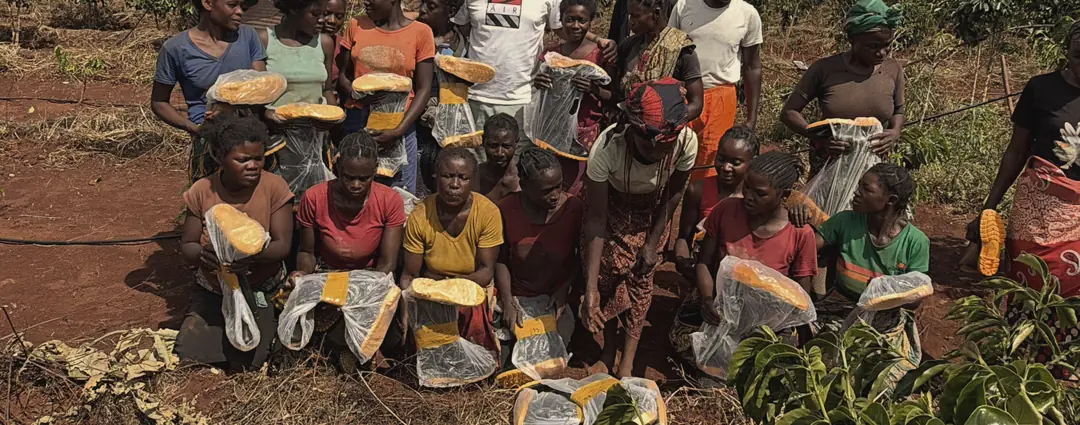
Our development approach places particular emphasis on opportunities for women and young people through field work, harvesting, processing and skills development. The photograph at the top of this page shows our own field team in Mwinilunga, and most of the people in it are women.
Young people and skills
Coffee rewards skill. Knowing when a cherry is ripe, how to run a pulper, when parchment on a drying bed needs sorting, how to keep a drip line clear: these are learned on the job and improve with every season. For young people in a rural district, that experience is worth more than a short-term wage. It is a trade.
That is why skills development sits next to employment in our plans. A farm that trains its own people becomes more reliable over time, and the people it trains carry those skills into whatever they do next. The day-to-day work itself is described in coffee farming in Zambia.
How does Lunga Coffee use water?
Zambia’s coffee harvest falls in the long dry season, and Algrano notes that irrigation can play an important role in maintaining consistent production. Water is therefore the resource we plan around most carefully.
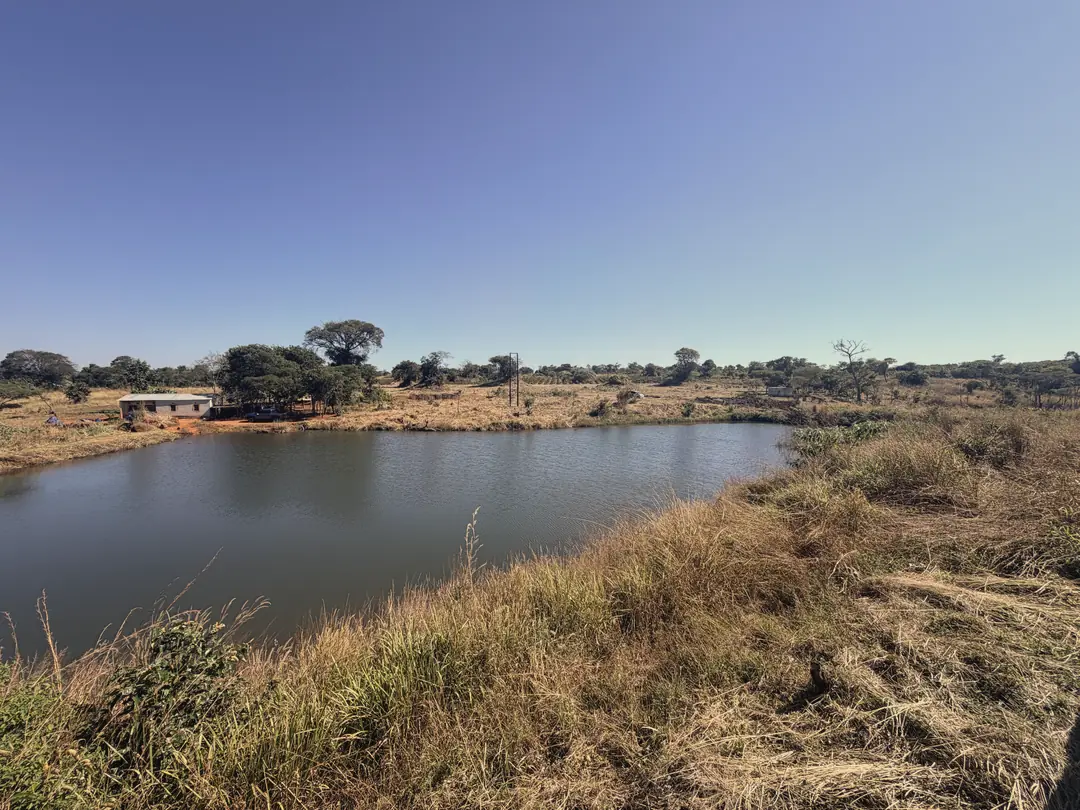
Our estate has drip irrigation reticulation, an earth dam and access to the Kanyikomboshi River. Drip lines deliver water along each planted row instead of flooding the field, and the dam stores water on the estate. Better water management, together with the power needed to move water reliably, is one of our immediate priorities. The place itself, its climate and its river, is covered in Mwinilunga coffee.
Outgrowers and community partnerships
Zambian research supports looking beyond the estate boundary. A University of Zambia study of the Kateshi and Ngoli estates in Kasama by Charity Mbalazi concludes that local outgrower involvement should be seen as a viable option for poverty alleviation among rural Zambians.
We share that view, and we want to be clear about where we are. As the estate develops, our longer-term ambitions include community partnerships in education, health and women’s empowerment, alongside a potential outgrower programme supported by training and market access. These are plans, not programmes running today. Each will be developed around operational readiness and commercial demand, and we welcome conversations with development partners who can help with agronomy, water and energy reliability, processing quality, skills and access to markets.
Legacy, Unity, Nature, Grit, Authenticity
For us, sustainable coffee farming in Zambia is less a label than a set of daily choices about people, land and water. Our name carries our values, and each one has a practical meaning on the estate.
- Legacy: building a business that can serve future generations.
- Unity: growing through shared effort with our people and communities.
- Nature: caring for the land and the water on which coffee depends.
- Grit: meeting the demands of farming with patience and persistence.
- Authenticity: staying true to our Zambian identity and origin.
Our vision is to become Africa’s most respected indigenous coffee brand, celebrated for quality, authenticity and community impact. Buyers who share those priorities can talk to us about green coffee supply.
Common questions
How does coffee farming create rural jobs in Zambia?
Coffee needs hands at nearly every stage, from nurseries and field care to selective picking and processing, so the work stays in rural districts. In Northern Province, Northern Coffee Corporation reports about 4,000 employees and 10,000 seasonal workers across its estates.
What role do women play in coffee?
The International Coffee Organization reports that women provide up to 70% of coffee production labour, depending on the region, and operate 20% to 30% of coffee farms, yet own on average 25% less land than men. These are global figures.
How does Lunga Coffee use water?
Lunga Coffee irrigates with drip reticulation, stores water in an earth dam and has access to the Kanyikomboshi River. Improving water management and power for irrigation is one of the estate’s immediate priorities.
Does Lunga Coffee have an outgrower programme?
Not yet. A potential outgrower programme, supported by training and market access, is one of Lunga Coffee’s longer-term ambitions as the estate develops.
Is Lunga Coffee certified?
Lunga Coffee does not currently claim any sustainability or organic certification. We describe our practices plainly instead and are happy to discuss them with buyers and partners.