
Zambian coffee origin
Mwinilunga is not on most coffee maps yet. This is where it is, what the climate is like, and what Lunga Coffee has built there since 2020.
Where is Mwinilunga?
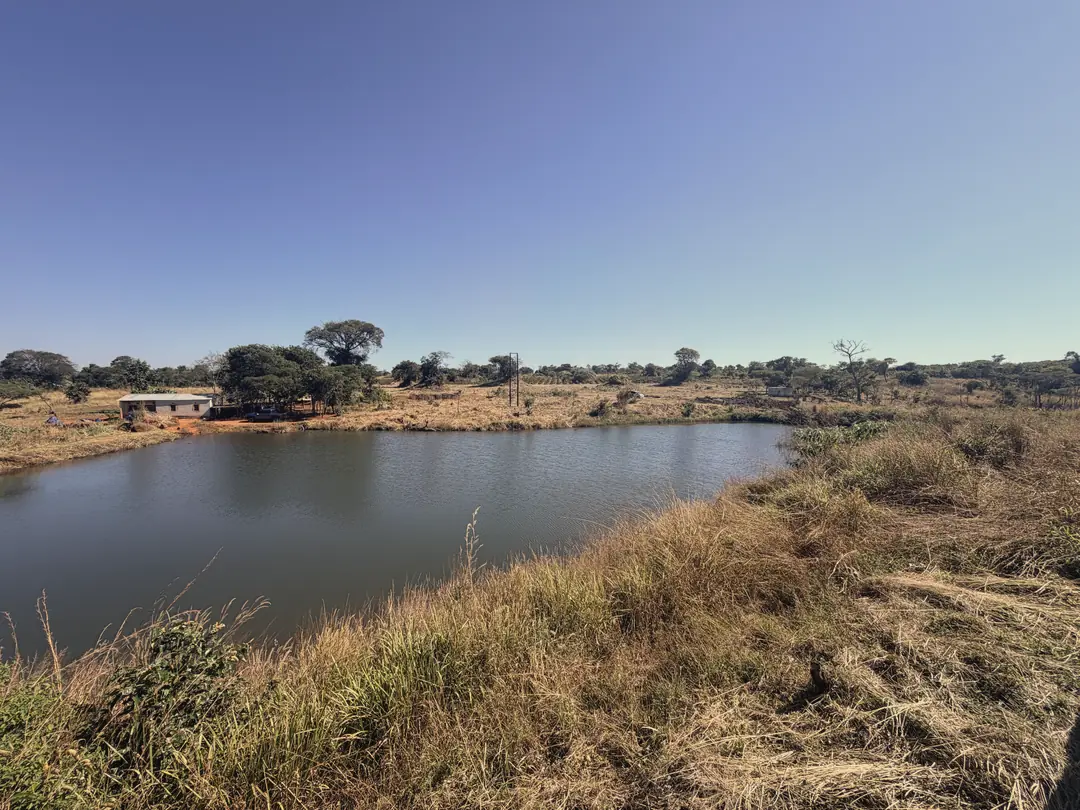
Mwinilunga is a town in North Western Province, in the extreme north-western corner of Zambia, close to the international borders with Angola and the Democratic Republic of the Congo (Wikipedia). It is source country: the Zambezi rises at Kalene Hill in Ikelenge District, approximately 80 kilometres north of the town.
Coffee is new here, but farming is not. The town is home to Kalene Hills Fruit Company, which processes fruit, beans, groundnuts and tomatoes supplied by over 1,500 small-scale farmers, and to Forest Fruits, which has worked in Mwinilunga since 1998 (Wikipedia). None of the sources we consulted on Zambian coffee lists the district among the country’s coffee areas, which sit mostly in the north-east (see coffee growing regions of Zambia).
Climate and altitude
The figures below are for Mwinilunga town, as published on Wikipedia. They are not measurements from our estate.
- Average elevation of about 1,391 metres above sea level.
- Roughly 1,400 mm of rain a year, mostly from October to May; the 1991 to 2020 climate table gives an annual average of about 1,316 mm.
- A mean daily maximum of 28.5°C and a mean daily minimum of 13.4°C across the year.
Two things follow. The town’s altitude sits inside the 1,300 to 1,600 metre band where most Zambian coffee is grown (Perfect Daily Grind). And Mwinilunga, described as one of the wettest places in Zambia, still has a long drier spell between the rains, so water has to be managed rather than assumed.
The Lunga Coffee estate
Lunga Coffee Limited is an indigenous-owned Zambian coffee farming business. The journey began in 2020 with land, coffee seed and a nursery; the company was incorporated on 6 May 2021. All estate facts here come from our company profile (our story).
Land
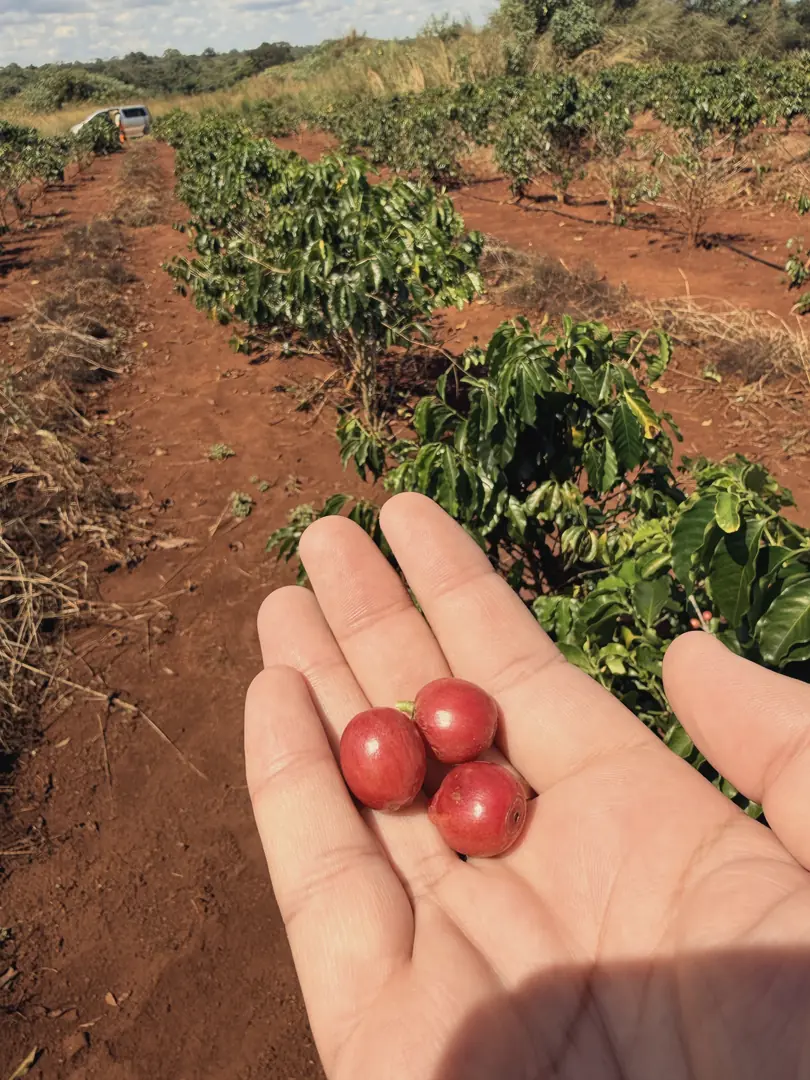
The estate has an 82-hectare footprint. Twenty hectares are planted with coffee today, and 62 hectares are planned for expansion.
Water
The estate has drip irrigation reticulation, an earth dam and access to the Kanyikomboshi River. Reliable irrigation is one of our immediate priorities, alongside rehabilitation of the existing coffee and plant nutrition. Strengthening power, water management and field supervision supports healthier crops and more consistent production.
Primary wet processing
The estate has its own primary wet-processing equipment. Our development plan connects careful crop management with harvesting, processing, drying and lot control, so that quality is protected at each stage of the coffee’s journey. Our guide to the washed coffee process explains what happens between ripe cherry and green bean.
The five-year plan
Our growth plan begins with improving the existing 20 hectares, then establishing additional coffee blocks in stages. The planned planted area is 32 hectares in year one, 46 in year two, 60 in year three, 72 in year four and 82 in year five.
That endpoint is a development target, not a promise. Final plantable area and the pace of expansion depend on field mapping, infrastructure needs, environmental setbacks, funding and agronomic performance. Reliable water and power, stronger field management and processing capacity have to develop alongside planting.
Why a new origin matters for buyers
For a roaster, a new growing area inside a known origin is useful in a specific way. Mwinilunga coffee comes from one estate, with one owner, its own water and its own wet processing, so the path from field to lot is short and easy to trace. Our commercial priority is to build consistent quality and supply, with buyer specifications guiding processing, lot preparation and delivery.
We aim to serve international roasters and importers seeking Zambian origin coffee, regional markets, and cafés, hotels, restaurants, retailers and offices in Zambia. If you want to follow Mwinilunga as an origin, talk to us about green coffee supply, or read our buyer’s guide to Zambian green coffee first. For the national picture, start with our complete guide to Zambian coffee.
Questions about Mwinilunga coffee
Where is Mwinilunga?
Mwinilunga is a town in North Western Province, in the extreme north-western corner of Zambia, close to the borders with Angola and the Democratic Republic of the Congo.
Is coffee grown in Mwinilunga?
Yes. Lunga Coffee grows Arabica on its estate at Mwinilunga, where 20 hectares are currently planted.
How big is the Lunga Coffee estate?
The estate has an 82-hectare footprint, with 20 hectares planted today and 62 hectares planned for expansion under a five-year development plan.
How is the estate irrigated?
Through drip irrigation reticulation, supported by an earth dam and access to the Kanyikomboshi River.
Can buyers source coffee from Mwinilunga?
Lunga Coffee’s primary product is green Arabica for roasters, traders and importers, with buyer specifications guiding lot preparation. Use our contact form to start a supply conversation.