
Zambian coffee origin
Zambia is one of Africa’s smaller and less familiar coffee origins. This guide covers what grows, where, how it is processed and who buys it, written from a working estate in Mwinilunga.
What is Zambian coffee?
Zambian coffee is Arabica grown in Zambia, and that is a legal definition as much as a botanical one. Section 17 of the Coffee Act states that no coffee other than Arabica shall be grown in Zambia. There is no Zambian Robusta.
Zambia sells its crop as green coffee: the dried, milled and unroasted seed that roasters buy. It is a small origin. According to Perfect Daily Grind, exports peaked at 6,654 tonnes of green coffee in the 2004/05 crop year, and Algrano puts that peak at around 6,500 tonnes.
That smallness shapes the coffee’s reputation. Algrano notes that Zambia does not yet have the recognisable flavour shorthand that buyers attach to Kenya or Ethiopia. For a roaster, that is both the difficulty and the appeal: the origin is still being defined, lot by lot.
Where does coffee grow in Zambia?
Most Zambian coffee comes from Northern Province, grown at 1,300 to 1,600 metres, with some around Lusaka (Perfect Daily Grind). Algrano places the main producing areas along the Muchinga escarpment, naming Kasama, Mbala, Nakonde and Isoka, with a handful of estates further south near Serenje and Lusaka. Perfect Daily Grind also lists estates at Mazabuka. Our guide to the coffee growing regions of Zambia takes each area in turn.
A new origin: Mwinilunga
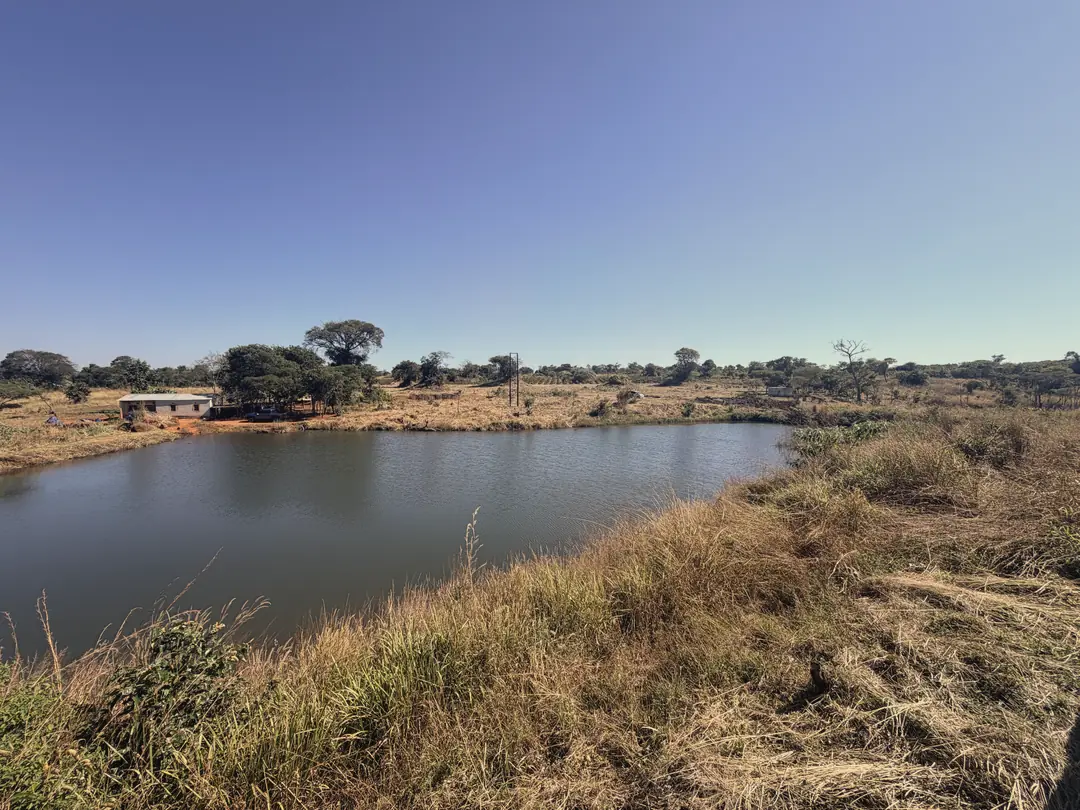
None of the sources above lists North Western Province among Zambia’s coffee areas. Mwinilunga sits in the extreme north-western corner of the country, close to the borders with Angola and the Democratic Republic of the Congo (Wikipedia). This is where Lunga Coffee grows Arabica, with 20 hectares planted on an 82-hectare estate (our story). Read more about Mwinilunga coffee and the estate.
A short history
Sources differ on when coffee arrived: the Global Coffee Report says the 1940s, a Starbucks origin sheet the 1950s, and Fresh Cup dates commercial success to the Ngoli smallholder scheme at Kasama in 1967. Exports began in 1985, and the full story of booms, closures and rebuilding is in our guide to Zambia’s coffee industry.
Varieties and flavour
Perfect Daily Grind names SL-28, a variety originally from Kenya, and some Catimor. Algrano adds SL34 and Catimor types, and reports that newer varieties such as Starmaya and Marsellesa are now being planted commercially.
On flavour, Algrano describes washed Zambian coffees as generally clean and balanced, with medium to good acidity and medium body, moving between citrus and fruit, chocolate and caramel. Our article on Zambian Arabica goes into varieties and what drives quality.
How Zambian coffee is grown and processed
The harvest starts in May. Perfect Daily Grind gives May to August; Algrano and the Starbucks sheet run it to September. Either way it falls inside Zambia’s long dry season, which is why Algrano says irrigation can play an important role in keeping production consistent. Our guide to coffee farming in Zambia covers nurseries, planting, water and licensing.
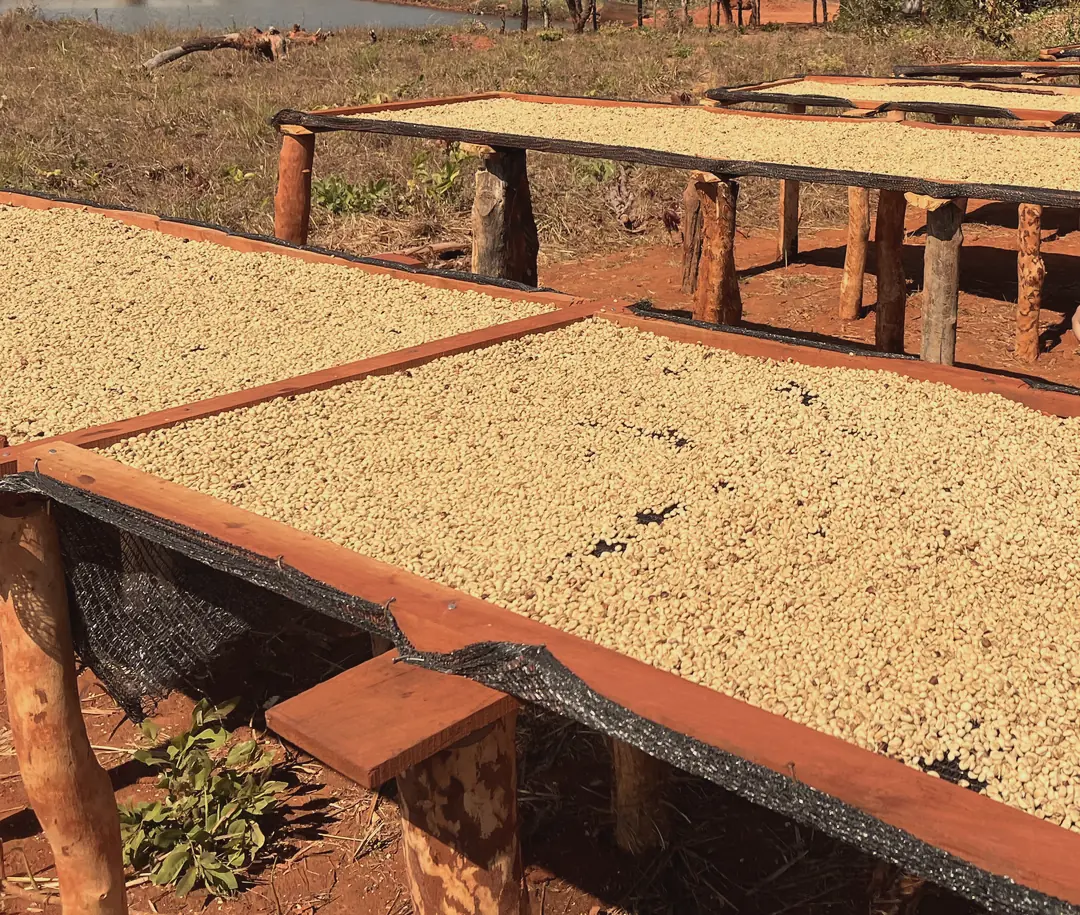
Washed processing is the most common method, with some naturals, pulped naturals and anaerobic coffees. Large estates use fermentation tanks and demucilagers. The Zambia Coffee Growers Association owns dry mills where smallholders can deliver parchment coffee, and graded coffee is stored in a central warehouse in Lusaka (Perfect Daily Grind). For the step-by-step version, see from cherry to green bean.
Who buys Zambian coffee?
Perfect Daily Grind lists major buyers in Europe, South Africa, Japan and the United States. Coffee from the north ships through Dar es Salaam in Tanzania; coffee from the south goes through South Africa or Namibia.
Japan is a market the government wants back. At Expo 2025 in Osaka, Larry Mulomba of the Ministry of Agriculture said: “Zambian coffee once had a strong presence here, but today it’s absent” (Zambia Monitor).
For roasters and importers, our buyer’s guide to Zambian green coffee explains seasons, export and sampling. If you are already looking for a Zambian lot, talk to us about green coffee supply.
Challenges and opportunity
Zambia is landlocked, and Perfect Daily Grind notes that this makes shipping difficult. Finance has been the deeper problem. In 2010 output fell to 1,250 tonnes from 1,643 tonnes the year before, after farm closures caused by a lack of affordable long-term finance (How we made it in Africa). In 2015 exports dropped to 180 tonnes because of poor weather and a lack of accessible finance, before recovering to almost 2,000 tonnes in 2019 (Perfect Daily Grind).
Our reading of that history is simple. Zambia can grow good Arabica; what it has lacked is steady investment and reliable supply. That is the gap a newer, owner-run estate has to close: by protecting quality at each stage, building consistent supply, and letting buyer specifications guide processing and lot preparation. It also means treating people and water as part of the crop, which we write about in women, youth and water in Zambian coffee.
Questions about Zambian coffee
Is all Zambian coffee Arabica?
Yes. Section 17 of Zambia’s Coffee Act states that no coffee other than Arabica shall be grown in Zambia.
Where is most Zambian coffee grown?
In the north-east, in Northern Province and along the Muchinga escarpment around Kasama, Mbala, Nakonde and Isoka, typically at 1,300 to 1,600 metres. Smaller estates operate near Lusaka, Serenje and Mazabuka.
When is coffee harvested in Zambia?
From May, in the dry season. Perfect Daily Grind gives May to August; Algrano and a Starbucks origin sheet give May to September.
How much coffee does Zambia export?
According to Perfect Daily Grind, exports peaked at 6,654 tonnes of green coffee in 2004/05, fell to 180 tonnes in 2015 and recovered to almost 2,000 tonnes in 2019. We did not find more recent official figures.
Who regulates coffee in Zambia?
The Coffee Board of Zambia, established under the Coffee Act (Cap. 228), with the Zambia Coffee Growers Association responsible for functions such as classifying coffee. The Coffee (Amendment) Act 2026 restructures the Board to include representatives of small- and large-scale growers.