
Buying Green Coffee
Zambia is a small origin with a clear export system and very little coffee on the open market. This guide covers when to buy, how export works from a landlocked country, and what to ask an estate before you commit.
Why source coffee from Zambia?
Scarcity is the first reason buyers look twice. Algrano observes that the entire country produces less coffee in a year than a single large Kenyan cooperative. Volumes have also swung hard: Perfect Daily Grind records a peak of 6,654 tonnes of green coffee exported in 2004/05, a low of 180 tonnes in 2015, and almost 2,000 tonnes exported in 2019.
Some markets that once knew Zambian coffee have lost it. At Expo 2025 in Osaka, a Ministry of Agriculture official told Zambia Monitor: “Zambian coffee once had a strong presence here, but today it’s absent.” For a roaster, that gap is an opening: an African Arabica origin few competitors carry, with a story that can be traced to a named estate.
All of it is Arabica. Section 17 of the Coffee Act states that no coffee other than Arabica shall be grown in Zambia. For flavour and varieties, read Zambian Arabica: varieties, flavour and quality, and for the bigger picture our complete guide to Zambian coffee.
When is Zambian coffee available?
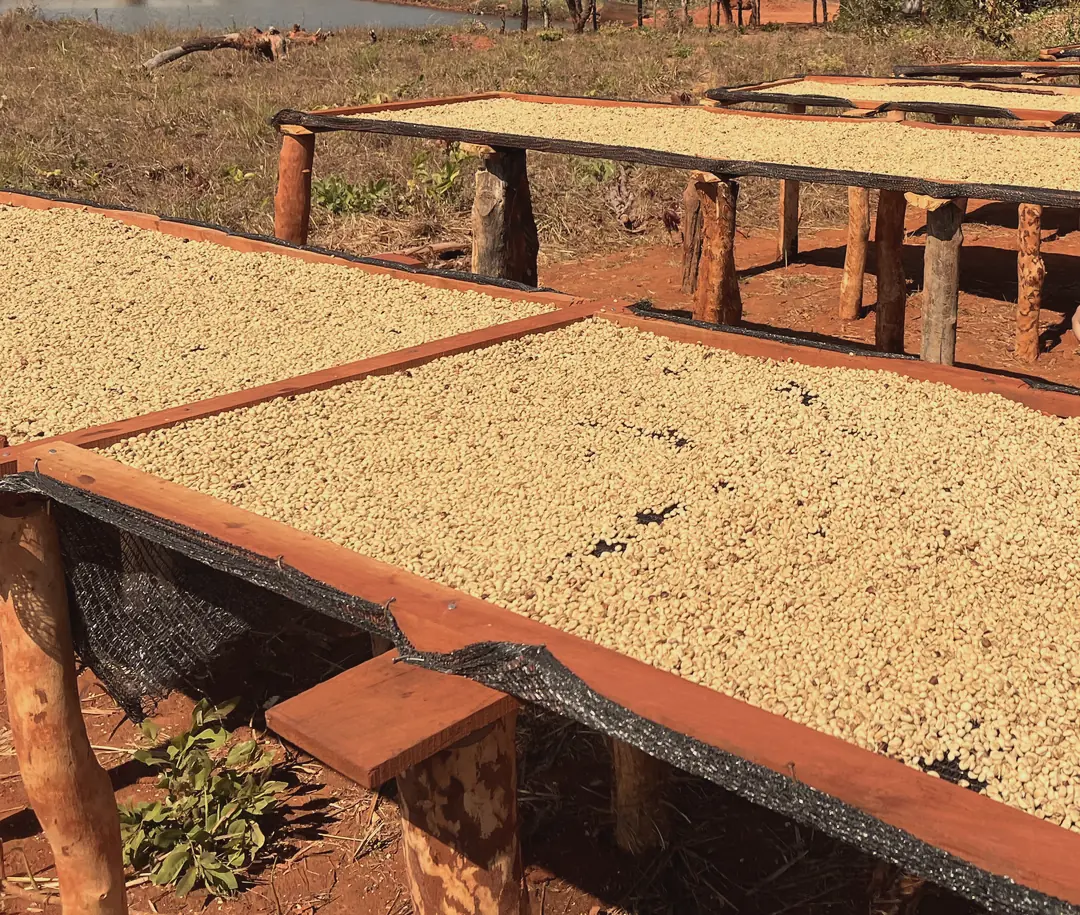
The harvest runs from May to August according to Perfect Daily Grind, or to September according to Algrano. Coffee then needs to be processed, dried, milled, graded and moved overland before it reaches a port, so plan conversations with growers well ahead of harvest rather than after it. Exact shipment windows depend on the estate, the lot and the logistics route, so confirm them with your supplier rather than relying on a general calendar.
How does Zambian coffee export work?
Milling, grading and documentation through the ZCGA
The Zambia Coffee Growers Association sits at the centre of the export chain. Perfect Daily Grind reports that it provides marketing, quality assessment, milling, export documentation and shipping, and that it handles quality control on behalf of the estates. Under section 26 of the Coffee Act, coffee shall only be classified by the Association. Fresh Cup describes the Association, established in 1989 and headquartered in Lusaka, as the sole authorised exporter of Zambian coffee.
In practice, that means a buyer can agree a lot and its specification with an estate, while the milling, classification and export paperwork run through the Association. Ask your supplier to explain exactly how a lot moves from their farm to the Association and on to you.
Logistics from a landlocked country
Zambia has no coastline. As Algrano puts it, all coffee destined for overseas buyers has to travel overland first. Perfect Daily Grind reports that coffee from the north ships via Dar es Salaam in Tanzania, while coffee from the south goes through South Africa or Namibia. The same source names Europe, South Africa, Japan and the United States as major buyers. Build overland transit into your lead times and agree early who handles which leg.
Thinking about a Zambian lot for next season? Talk to us about green coffee supply and we will tell you plainly what we can and cannot offer.
Buying through an importer or direct from the estate
Both routes work, and many roasters use both over time.
- Through an importer: the importer finances, ships, warehouses and often splits lots into smaller quantities. It suits roasters who want a few bags, landed and ready, without managing origin logistics themselves.
- Direct from the estate: you build a working relationship with the grower, agree specifications before harvest and know exactly whose coffee you are roasting. It asks more of you in planning, communication and logistics, and it works best when volumes and expectations are agreed early.
A common middle path is to source direct and have an importer you already trust handle shipping and finance. Whichever you choose, insist on traceability to the farm.
What should you ask a Zambian grower?
- Variety: which Arabica varieties are in the lot, and in what proportion.
- Process: washed, natural or another method, and how drying is managed. Our guide to the washed coffee process explains the stages.
- Lot size and timing: how much coffee the lot holds and when it will be ready to move.
- Samples: whether a pre-shipment sample is available, and when.
- Specifications: whether the grower can prepare coffee to your grade, screen size and defect requirements.
- Traceability: which blocks or plots the coffee came from, and how lots are kept separate.
If any of these terms are unfamiliar, our green coffee glossary defines them in plain language.
Why origin and traceability matter
Origin tells a roaster more than a flavour note. It explains the growing conditions, the processing choices and the people behind the lot. Traceability to an estate lets you check claims, repeat what worked and tell your customers something true. For a small origin like Zambia, it also means your purchase supports a specific farm, which matters when the whole country’s output is modest.
Working with Lunga Coffee
Lunga Coffee is an indigenous-owned Zambian coffee farming business in Mwinilunga, North Western Province. Our estate has an 82-hectare footprint with 20 hectares currently planted, drip irrigation, an earth dam, access to the Kanyikomboshi River and primary wet-processing equipment. You can read more about the place in Mwinilunga coffee.
Our primary product is green Arabica for roasters, traders and importers. The commercial priority is consistent quality and supply, with buyer specifications guiding processing, lot preparation and delivery. We also work towards hospitality and wholesale supply in Zambia. Roasted and packaged ground coffee are planned for the future, not current products.
We would rather have an honest first conversation than make a promise we cannot keep. Tell us what you roast, the volumes you are considering and your timing, and we will tell you what is realistic for the coming season.
Questions buyers ask
Can I buy green coffee directly from Zambian farms?
Yes. Buyers can agree lots directly with Zambian estates, or buy through importers that list Zambian coffee. Milling, classification and export documentation run through the Zambia Coffee Growers Association, which Fresh Cup describes as the sole authorised exporter.
How is Zambian coffee shipped?
Zambia is landlocked, so coffee travels overland first. Coffee from the north usually ships via Dar es Salaam in Tanzania, and coffee from the south through South Africa or Namibia.
When is Zambian coffee available?
The harvest runs from May to August, or into September by some accounts. Processing, milling and overland transport follow, so confirm shipment timing with your supplier and start conversations before harvest.
Who handles Zambian coffee exports?
The Zambia Coffee Growers Association provides marketing, quality assessment, milling, export documentation and shipping. Under section 26 of the Coffee Act, only the Association may classify coffee.
How do I request a sample from Lunga Coffee?
Send a green coffee supply enquiry through our contact page, or email lennard@lungacoffee.com. Tell us your volumes, specifications and timing, and we will reply with what we can realistically offer, including whether samples are available.