
Buying Green Coffee
The green coffee trade has its own vocabulary, and a few words carry a lot of meaning in a contract or a sample note. Here are the terms we use most, defined plainly, with notes on how they apply in Zambia.
What is green coffee?
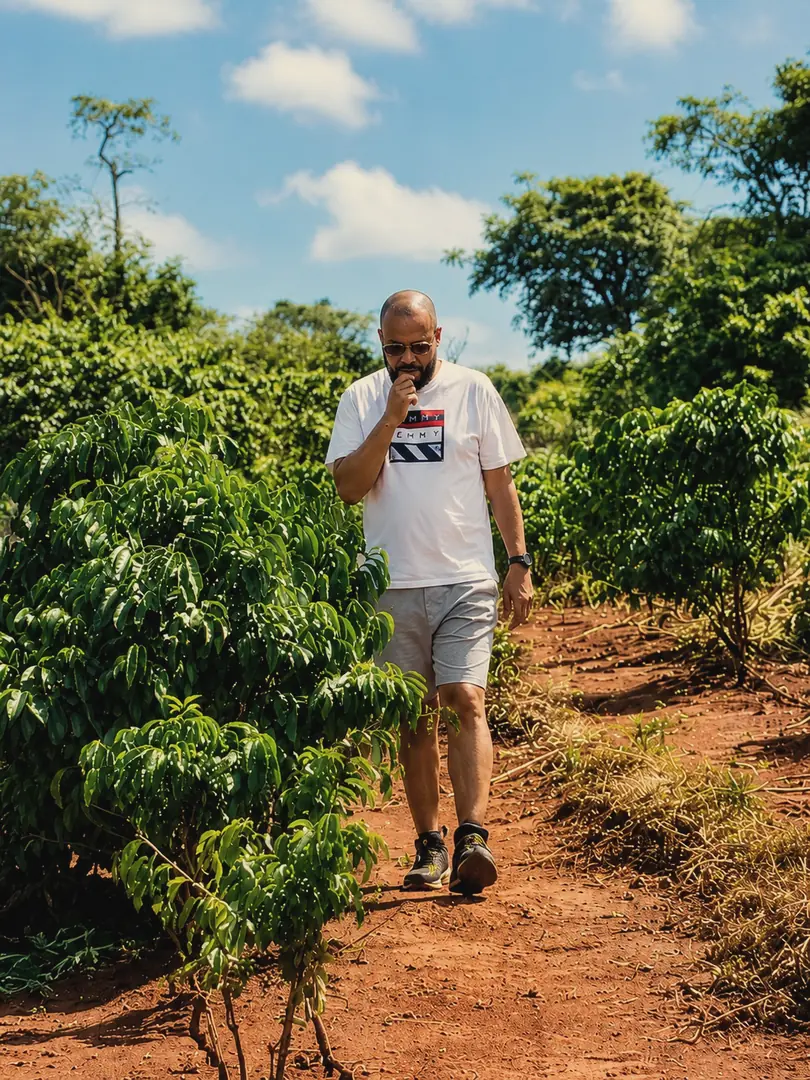
Green coffee is coffee before roasting. After the ripe cherry is picked, the fruit and protective layers are removed, the seed is dried and milled, and what remains is a hard, pale green bean that can be stored and shipped. The National Coffee Association puts it simply: all coffee begins as green, unroasted beans. Roasters buy green coffee and roast it themselves, which is why the green trade has its own language for quality, process and size. Definitions below draw on Royal Coffee’s green coffee glossary unless another source is linked.
Green coffee terms, A to Z
Arabica
The coffee species Coffea arabica, valued for its quality in the cup. In Zambia it is the only species allowed: section 17 of the Coffee Act states that no coffee other than Arabica shall be grown in Zambia.
Cherry
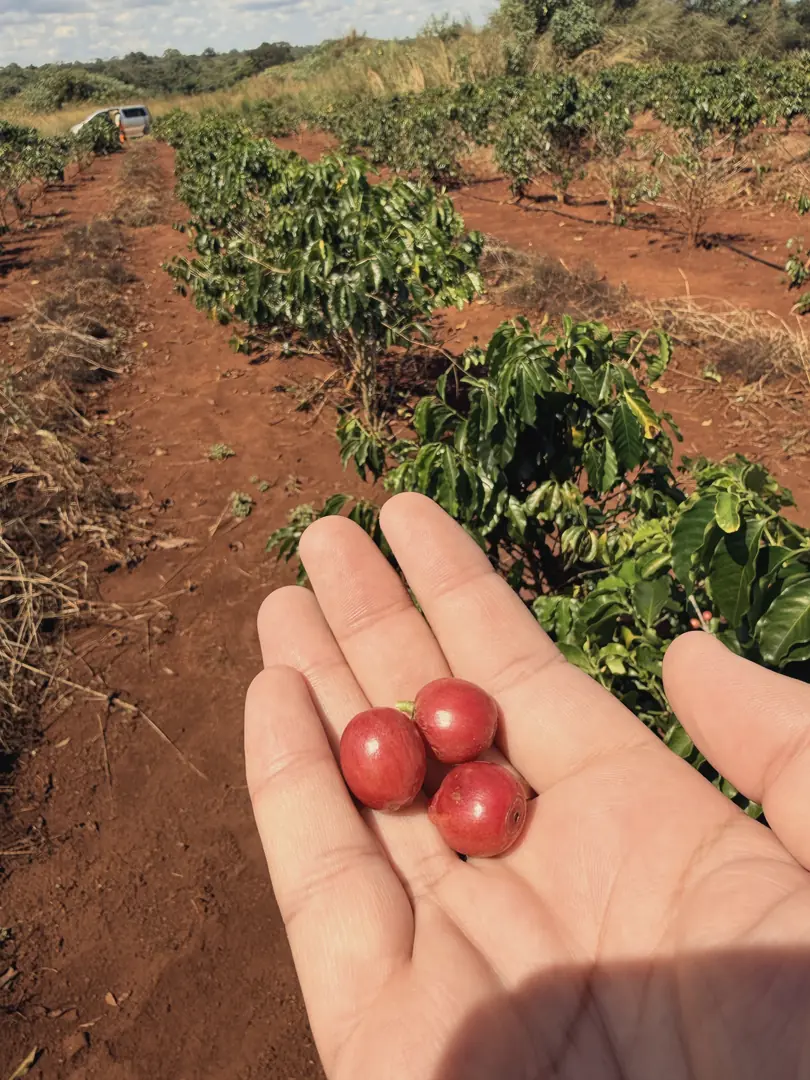
The fruit of the coffee plant. Each cherry usually holds two seeds, which become the coffee beans once the fruit is removed. Ripe cherries are typically red.
Demucilager
A machine that removes mucilage from pulped coffee mechanically, instead of by fermentation. Royal Coffee describes a demucilaginator as machinery that can depulp and demucilage coffee cherries. Perfect Daily Grind reports that Zambia’s large estates use demucilagers sourced from Tanzania.
Depulping (pulping)
The removal of the fruit layers from the parchment coffee, usually the first step of washed processing after picking and sorting.
Dry mill
The facility that hulls parchment coffee, sorts it for defects, density and screen size, and bags it for export. In Zambia, the Zambia Coffee Growers Association owns its own dry mills, open to smallholders who bring their coffee as parchment, according to Perfect Daily Grind.
Fermentation tank
A tank in which pulped coffee sits so that natural fermentation breaks down the remaining mucilage before washing. Perfect Daily Grind reports that Zambia’s large estates have fermentation tanks.
Grade
A classification of green coffee by size, defects and other quality criteria. Zambia’s quality assessment drew on the Kenyan green coffee grading and classification system, according to Perfect Daily Grind. Under section 26 of the Coffee Act, coffee shall only be classified by the Zambia Coffee Growers Association.
Green coffee
The raw, unroasted seed of the coffee cherry after processing, drying and milling. It is the form in which coffee is traded internationally.
Honey process
A method in which the cherry skin is removed and the coffee is dried without removing the mucilage. The National Coffee Association calls it semi-washed and notes that at least some of the mucilage layer is left intact. In Zambia, related pulped natural coffees are produced by some farms.
Hulling
Removing the parchment, or the dried cherry skin in the case of naturals, from the seed before sorting and export. Hulling happens at the dry mill.
Lot
A defined quantity of coffee kept separate from other coffee so it can be sampled, described and sold as one unit. Lot separation is what makes traceability possible. On our estate, lot control is part of how we protect quality from harvest to delivery.
Mucilage
The sticky flesh of the coffee cherry, directly beneath the skin. How much of it is removed, and when, is the main difference between washed, honey and natural coffees.
Natural process
A method of letting the coffee fruit dry with the skin and mucilage intact. The National Coffee Association describes freshly picked cherries spread on large surfaces to dry in the sun, then hulled. Some Zambian farms produce naturals.
Outgrower
A smaller independent farmer who grows coffee alongside, and often sells through, a larger estate or company that may provide training or market access. In Zambia, TradeMark Africa reported that Northern Coffee Corporation’s outgrower scheme includes over 3,000 small-scale farmers.
Parchment
The layer of cellulose beneath the mucilage that protects the coffee bean and resembles parchment paper when dried. Washed coffee is dried “in parchment”, and “parchment coffee” means coffee still in this layer, before hulling.
Peaberry
A coffee cherry that, through a natural mutation, produces only one seed instead of two. The single seed is rounder than a normal flat-sided bean and is often sorted and sold as its own grade.
Screen size
A measure of bean size, found by passing coffee through screens with round holes measured in increments of 1/64 of an inch. Perfect Daily Grind gives the example that a screen 15 hole is 15/64 inch, about 5.95 mm, and that most green coffee sits between screens 12 and 19.
Selective picking
Harvesting only ripe cherries by hand, returning to the same trees as more fruit ripens. The National Coffee Association describes pickers rotating among the trees every 8 to 10 days. It costs more labour than strip picking but gives a more even lot.
Washed process
A method in which the fruit is depulped with water and the remaining mucilage is removed by fermentation before the coffee is dried in parchment. It is the most common process in Zambia. Our guide to the washed coffee process follows it step by step.
Wet mill
The site where washed processing takes place: pulping, fermentation and drying of parchment or whole cherry. On a farm it is often called the processing station. Lunga Coffee has primary wet-processing equipment on its estate at Mwinilunga.
ZCGA
The Zambia Coffee Growers Association. Perfect Daily Grind reports that it provides marketing, quality assessment, milling, export documentation and shipping, and Fresh Cup describes it as the sole authorised exporter of Zambian coffee. How it fits into a purchase is explained in how to buy Zambian green coffee.
For flavour and varieties, read Zambian Arabica: varieties, flavour and quality. For the whole origin in one place, see our complete guide to Zambian coffee. And if you are planning a purchase, talk to us about green coffee supply.
Questions buyers ask
What is green coffee?
Green coffee is the raw, unroasted seed of the coffee cherry after processing, drying and milling. It is the form in which coffee is traded between growers, importers and roasters, who roast it themselves.
What is parchment coffee?
Parchment coffee is coffee still inside its parchment, the cellulose layer beneath the mucilage that protects the bean. Washed coffee is dried in parchment, which is removed by hulling at the dry mill before export.
What is a peaberry?
A peaberry is a coffee cherry that produces only one seed instead of the usual two, because of a natural mutation. The single, rounded bean is often sorted and sold separately.
What does AA mean in coffee?
AA is a grade in the Kenyan grading system, determined by screen size, and is one of the highest grades in that system. Zambia’s coffee grading drew on the Kenyan system, so ask your supplier which grade names apply to a specific Zambian lot.
Is green coffee the same as unroasted coffee?
Yes. Green coffee simply means coffee that has been processed and milled but not yet roasted. The name comes from the pale green colour of the dried beans.