

Growing & Processing
A coffee seed spends its first weeks after harvest being stripped of fruit, cleaned and dried. How that is done shapes the coffee a roaster finally receives, and in Zambia the usual answer is the washed process.
What is washed coffee?
Washed coffee is coffee whose fruit has been taken off the seed before drying, rather than dried on it. Royal Coffee’s green coffee glossary defines it as a method in which the fruit is depulped with water and the remaining mucilage is removed using fermentation. What is left at the end of the washed coffee process is the seed in its protective parchment layer, dried and later milled into green coffee.
It is the dominant method in Zambia. Perfect Daily Grind describes Zambian coffee as generally washed, with some farms also producing naturals, pulped naturals and anaerobic lots, and Algrano says most Zambian coffee is fully washed.
The washed process, step by step
Selective picking
Processing quality starts on the tree. Cherries on a branch ripen at different times, so for premium Arabica pickers rotate among the trees every 8 to 10 days and take only the ripe fruit, as the National Coffee Association describes. Unripe or overripe cherries that slip through travel with the lot all the way to the roaster.
Sorting and pulping
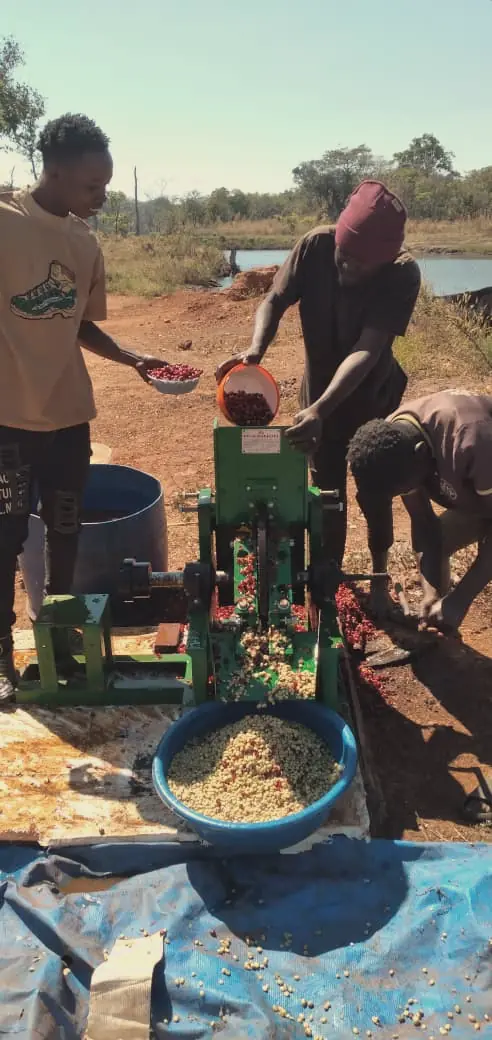
Picked cherries are sorted, then pulped: the skin and most of the fruit are pressed away from the seeds. Royal Coffee calls this depulping, the removal of fruit layers from the parchment coffee. On our estate at Mwinilunga, cherries go through a hand pulper, and the pulped beans are checked in water before the next stage.
Removing mucilage: fermentation tanks or demucilagers
After pulping, the seeds are still coated in mucilage, the sticky flesh of the cherry that sits directly beneath the skin. In the classic washed method it is broken down by fermentation and then washed away. Some producers use machines instead: Royal Coffee describes a demucilaginator as machinery that can depulp and demucilage cherries. Perfect Daily Grind reports that Zambia’s large estates have both fermentation tanks and demucilagers, sourced from Tanzania.
Drying in parchment
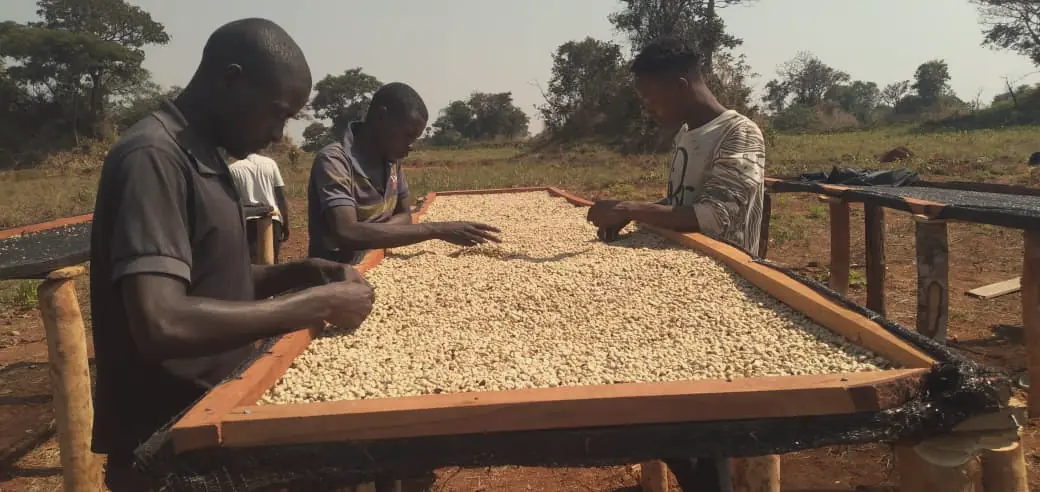
Once clean, the coffee is dried in its parchment, the layer of cellulose beneath the mucilage that protects the seed and, as Royal Coffee puts it, resembles parchment paper when dried. Coffee is dried in the sun or by machine. At Mwinilunga we dry on raised beds, where the parchment is spread out and hand-sorted to pick out defects. We do not quote target moisture levels or drying times here, because they vary with weather, altitude and the buyer’s specification.
Hulling, grading and the dry mill
Dried parchment coffee is stable enough to store and move. At the dry mill it is hulled, which removes the parchment from the seed, then sorted for defects, density and screen size, and bagged for export, following Royal Coffee’s definitions. The result is green coffee, the form in which coffee is traded.
In Zambia, the Zambia Coffee Growers Association plays a central role here. Perfect Daily Grind reports that the Association owns its own dry mills, which are open to smallholders who can bring their coffee to it as parchment, and that it handles quality control on behalf of the estates. After milling, coffee is stored in a central warehouse in Lusaka. Under section 26 of the Coffee Act, coffee shall only be classified by the Association. Zambia’s grading drew on the Kenyan green coffee grading and classification system, which Perfect Daily Grind credits as the country’s first real quality assessment method.
Washed, natural and honey: what is the difference?
The three main methods differ in how much of the fruit stays on the seed while it dries. The National Coffee Association sets them out like this:
- Natural (dry) process: whole cherries are spread out to dry in the sun, and the dried fruit is hulled off afterwards.
- Washed (wet) process: skin and pulp are stripped from the cherry before the beans are dried in the sun or by machine.
- Honey (semi-washed) process: the pulp is removed but at least some of the mucilage stays on the seed while it dries.
Each method has its place. In Zambia, washed coffee dominates, with some farms also producing naturals and pulped naturals. For how process links to flavour and variety, read Zambian Arabica: varieties, flavour and quality. For quick definitions of every term above, use our green coffee glossary.
Why processing protects quality
Processing cannot add quality that the field did not grow, but it can lose it quickly. Cherries left too long before pulping, uneven fermentation, beds that are not turned or parchment that rewets in storage can all show up later as defects. That is why we treat the field and the processing station as one system. Our development plan connects careful crop management with harvesting, processing, drying and lot control, so that quality is protected through each stage of the coffee’s journey. Field work comes first, and it is covered in coffee farming in Zambia.
Primary wet processing at Mwinilunga
Lunga Coffee has primary wet-processing equipment on the estate, alongside drip irrigation, an earth dam and access to the Kanyikomboshi River. Having water and processing close to the coffee means cherries can move from tree to pulper without long journeys, and it lets us prepare lots around what a buyer asks for. Our commercial focus is green Arabica for roasters, traders and importers, with buyer specifications guiding processing, lot preparation and delivery. If you are sourcing, our guide to buying Zambian green coffee explains how export works, or you can talk to us about green coffee supply.
Questions about washed coffee
What is the difference between washed and natural coffee?
Washed coffee has its skin and fruit removed before the seed is dried. Natural coffee is dried as a whole cherry, with the fruit removed only after drying. Honey process sits between the two: the pulp is removed but some mucilage stays on during drying.
What is parchment coffee?
Parchment coffee is the seed still inside its parchment, a thin cellulose layer beneath the mucilage that protects the bean. Washed coffee is dried in parchment, and the parchment is removed by hulling at the dry mill.
Why is most Zambian coffee washed?
Washed processing is the established practice in Zambia, and industry reports describe most Zambian coffee as washed or fully washed. Large estates have fermentation tanks and demucilagers. Some farms also produce naturals, pulped naturals and anaerobic coffees.
Who grades Zambian coffee?
Under section 26 of the Coffee Act, coffee shall only be classified by the Zambia Coffee Growers Association. The Association runs dry mills, handles quality assessment and uses a grading system based on the Kenyan model.
What is green coffee?
Green coffee is the raw, unroasted seed of the coffee cherry after processing, drying and milling. It is the form in which coffee is traded between growers, importers and roasters. Our green coffee glossary defines the related terms.