
Zambian coffee origin
Zambian coffee has grown, collapsed and started again more than once. Here is the short history, the bodies that govern the crop today, and where newer growers fit.
When did coffee arrive in Zambia?
The sources do not agree, and it is better to say so than to pick one. The Global Coffee Report says Zambia started growing coffee in the 1940s, after missionaries brought Bourbon varieties from Kenya and Tanzania. A Starbucks origin sheet dates the first trees to the 1950s, again planted by missionaries with seed from Tanzania and Kenya. Perfect Daily Grind also gives the 1950s and adds that those early plantings struggled with disease and the subtropical climate, so yields stayed small.
Commercial coffee came later. Fresh Cup places the turning point in 1967, when the Ngoli Coffee Scheme in Kasama was established as a smallholder settlement. Our reading: missionaries planted coffee in the middle of the century, and organised production began with Ngoli.
Kasama and the World Bank years
In the 1970s the World Bank ran coffee projects in Zambia to diversify the economy away from copper, and the FAO later joined. According to Perfect Daily Grind, the projects used Kenya as their model, including its green coffee grading system, and backed both smallholders and large estates. Smallholder numbers nearly doubled by the mid 1980s, production rose from about 70 to almost 400 tonnes, and the International Coffee Organization gave Zambia an annual quota of 350 tonnes.
Kasama sat at the centre of this. A University of Zambia study by Charity Mbalazi follows the Kateshi and Ngoli estates from 1967 to 2012: from pilot schemes to a government parastatal, and finally to private investors. Its conclusion is worth keeping in mind: the estates have the potential to produce high-quality coffee, and local outgrower involvement could help reduce rural poverty.
Exports, peak and decline
Zambia began exporting coffee in 1985 (Fresh Cup). Exports peaked at 6,654 tonnes of green coffee in the 2004/05 crop year (Perfect Daily Grind); Algrano gives around 6,500 tonnes for the same harvest.
Then the decline. Output in 2010 fell to 1,250 tonnes from 1,643 tonnes the year before, because of farm closures caused by a lack of affordable long-term finance (How we made it in Africa). By 2015 exports had dropped to 180 tonnes, which Perfect Daily Grind attributes to poor weather and a lack of accessible finance. The Global Coffee Report, citing the ICO, puts the 2014/15 crop at as little as 3,000 bags. Recovery followed: Zambia exported almost 2,000 tonnes in 2019. We did not find more recent official export figures.
Rebuilding: estates, outgrowers and new markets
The largest single step in the recovery came in 2012, when Olam International took over the assets of Kasama Coffee Company, which had been in receivership since 2008 (TradeMark Africa). Its five estates, Kateshi, Ngoli, Luombe, Isanya and Nsunzu, are run by its Zambian business, Northern Coffee Corporation (NCCL). They cover 7,200 hectares in Kasama, Mbala and Mungwi districts, about 2,171 of them under coffee. In 2022 the company reported about 4,000 employees, 10,000 seasonal workers and an outgrower scheme with over 3,000 small-scale farmers.
The industry is concentrated. Perfect Daily Grind describes smallholders farming under 10 hectares alongside five large estate groups, with estates producing about 90% of Zambian coffee.
Government is now looking for buyers abroad again. At Expo 2025 in Osaka, Larry Mulomba of the Ministry of Agriculture said of Japan: “Zambian coffee once had a strong presence here, but today it’s absent” (Zambia Monitor).
Who governs coffee in Zambia?
Coffee Board of Zambia
The Board is established as a body corporate under section 3 of the Coffee Act, Act No. 24 of 1989, now Chapter 228 of the Laws of Zambia. Perfect Daily Grind describes it as the top policy body for the industry.
Zambia Coffee Growers Association
The ZCGA is a grower-run wing of the Coffee Board, providing marketing, quality assessment, milling, export documentation and shipping services (Perfect Daily Grind). It was established in 1989, is headquartered in Lusaka, and Fresh Cup describes it as the sole authorised exporter of Zambian coffee. Under the Act, the Association may regulate the production, curing, collection, packaging and storage of coffee, and coffee may only be classified by the Association.
The Coffee Act and the 2026 amendment
Three provisions matter most to growers. Section 17 says no coffee other than Arabica shall be grown in Zambia. Sections 20 to 23 provide for coffee growers’ certificates and coffee treatment establishment certificates. Section 24 requires a register of all land planted with coffee.
The Coffee (Amendment) Act 2026, Act No. 44 of 2026, restructures the Board. According to the InforMEA summary, the new Board includes representatives of small- and large-scale growers, a coffee research institution and coffee roasting licence holders, alongside ministry representatives, and members serve a four-year term renewable once. We have read the summary rather than the full Act, so check the text published by the National Assembly before relying on the detail.
Where newer growers fit
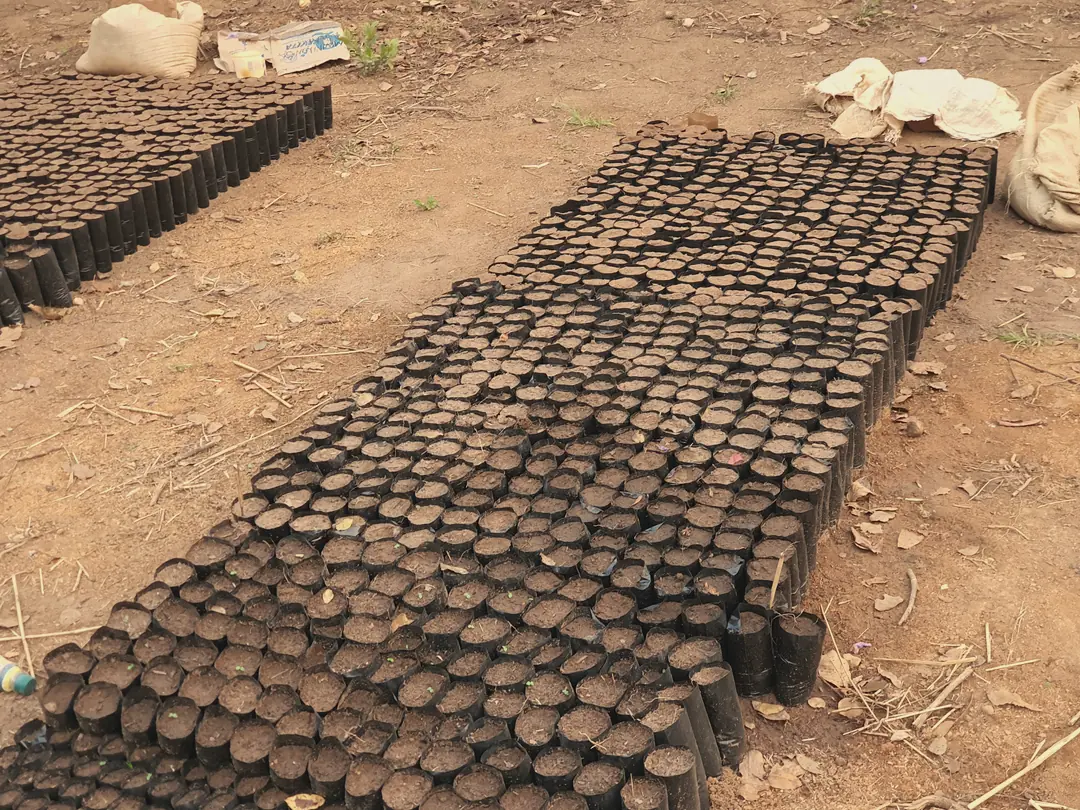
Lunga Coffee is part of the newest chapter. Our journey began in 2020 with land, coffee seed and a nursery, and the company was incorporated on 6 May 2021. Today the estate in Mwinilunga, North Western Province, has 20 hectares of planted coffee, drip irrigation, an earth dam, access to the Kanyikomboshi River and primary wet-processing equipment (our story).
The history above has an obvious lesson for any grower: farms in Zambia have failed for lack of finance and reliability, not lack of potential. So our plan starts with the existing 20 hectares and adds coffee blocks in stages, with water, power and processing capacity developing alongside planting. You can see where Mwinilunga sits on the map in our guide to the coffee growing regions of Zambia, or start with the overview of Zambian coffee. Roasters following the origin can read our buyer’s guide, or talk to us about green coffee supply.
Questions about Zambia’s coffee industry
When did Zambia start growing coffee?
Sources differ. The Global Coffee Report dates it to the 1940s, a Starbucks origin sheet and Perfect Daily Grind to the 1950s, and Fresh Cup places commercial success with the Ngoli smallholder scheme at Kasama in 1967.
When did Zambia start exporting coffee?
In 1985, according to Perfect Daily Grind and Fresh Cup.
What is the Zambia Coffee Growers Association?
The ZCGA is a grower-run wing of the Coffee Board of Zambia, based in Lusaka and established in 1989. It provides marketing, quality assessment, milling, export documentation and shipping services, and under the Coffee Act only the Association may classify coffee.
Why did Zambian coffee production fall?
Mainly finance and weather. Output fell in 2010 after farm closures caused by a lack of affordable long-term finance, and exports dropped to 180 tonnes in 2015 because of poor weather and a lack of accessible finance.
What changed in the Coffee (Amendment) Act 2026?
According to the InforMEA summary, it restructures the Coffee Board to include representatives of small- and large-scale growers, a coffee research institution and coffee roasting licence holders, with members serving a four-year term renewable once.