


Growing & Processing
Growing coffee in Zambia is a long commitment: a species fixed by law, a nursery year before the field, three or four years before the first real crop, and a harvest that lands in the driest months.
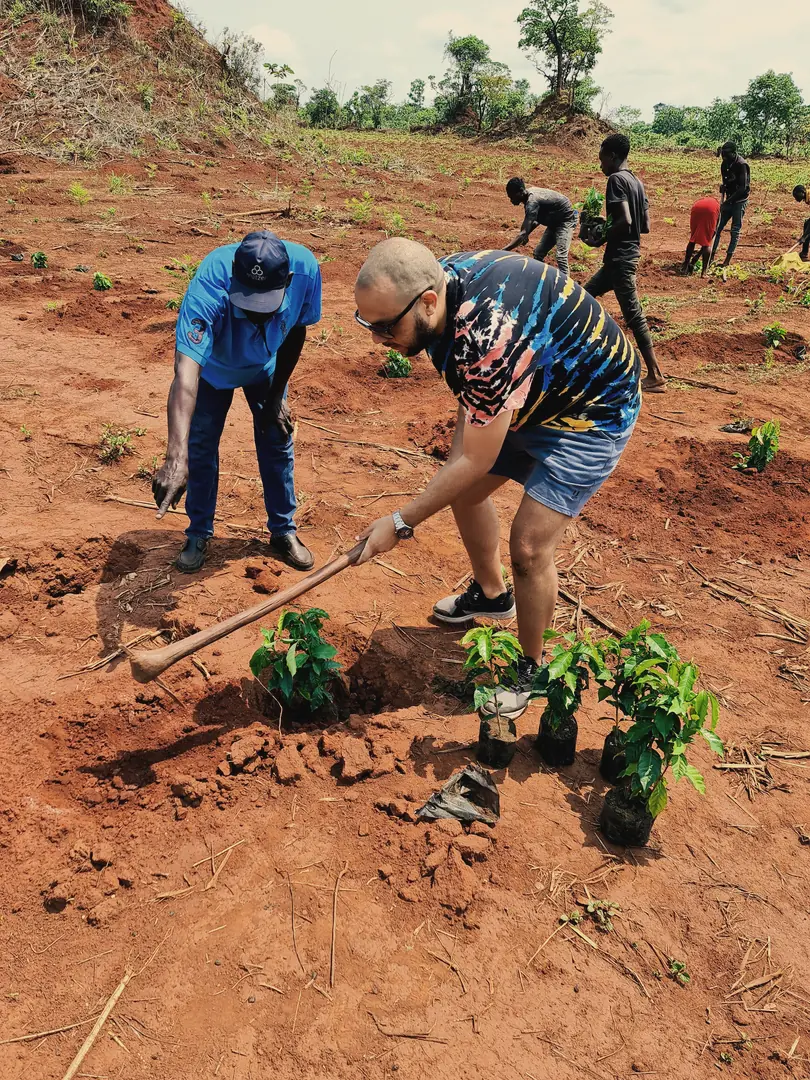
Where can coffee be grown in Zambia?
Start with the law. Section 17 of the Coffee Act, Cap. 228 states that no coffee other than Arabica shall be grown in Zambia. Every decision a grower makes after that, from site to seedling, is an Arabica decision.
Arabica wants height. Algrano notes that most Zambian coffee grows above 1,200 metres, with the best lots well past 1,500, on older granite and gneiss soils rather than volcanic ones. Perfect Daily Grind places most production in Northern Province at 1,300 to 1,600 metres, with coffee also grown around Lusaka.
Scale varies widely. The same Perfect Daily Grind report defines smallholders as farmers growing on fewer than 10 hectares, and they work alongside a handful of large estates. At the large end, TradeMark Africa reported in 2022 that Northern Coffee Corporation runs five estates covering 7,200 hectares, about 2,171 of them under coffee, in Kasama, Mbala and Mungwi. Newer growers sit in between. Lunga Coffee farms 20 planted hectares on an 82-hectare estate in Mwinilunga, North Western Province, a part of the country covered in our guide to Mwinilunga coffee. For the wider map, see coffee growing regions of Zambia.
From seed to nursery to field
A coffee farm begins long before anything is planted in rows. Seed goes into nursery bags under shade, and the young plants are kept shaded and steadily watered before they move to the field. The National Coffee Association describes this shaded nursery stage and puts the wait for fruit at approximately three to four years after planting, depending on the variety.
That timeline shapes everything about the economics of a new farm. Land, water and labour are paid for years before the first meaningful harvest. Our own journey followed this order: Lunga Coffee began in 2020 with land, coffee seed and a nursery, and was incorporated on 6 May 2021.
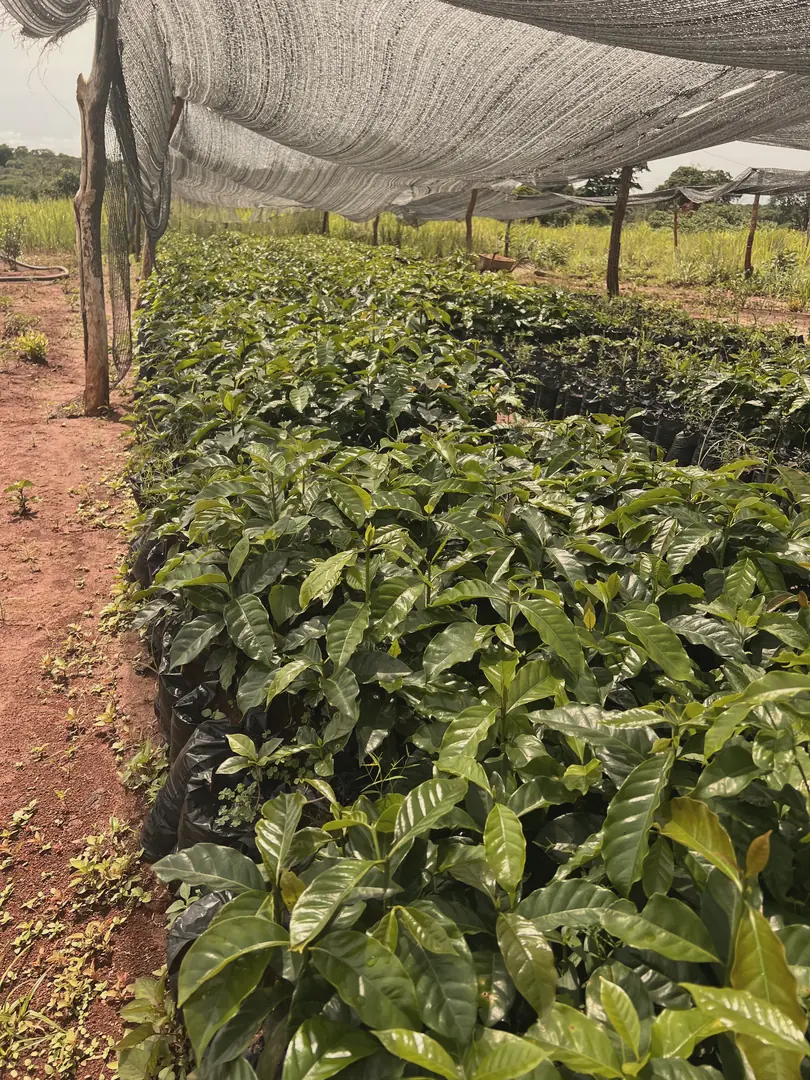
Why does irrigation matter for coffee in Zambia?
Zambia’s coffee harvest runs from May to August according to Perfect Daily Grind, or into September according to Algrano, which places it squarely inside the long dry season. The trees carry and ripen their crop when the rains have stopped. Algrano adds that irrigation can play an important role in keeping production consistent.
Water is the first thing we planned around. The estate has drip irrigation reticulation, an earth dam and access to the Kanyikomboshi River. Drip lines put water at the root zone of each row rather than across the whole field, which suits a crop that needs steady moisture through a dry spell. Reliable irrigation sits on our list of immediate priorities, alongside better water management and the power needed to run it.
Nutrition, rehabilitation and field supervision
Planting is the visible part of coffee farming. Keeping plants productive is the harder part. Our development plan names rehabilitation of the existing coffee, plant nutrition and reliable irrigation as the immediate work, supported by stronger power supply, water management and field supervision.
Supervision matters more than it sounds. Coffee is a perennial crop, and the condition of each block reflects years of decisions about feeding, pruning, weeding and water. A field team that knows every row can spot stress early. Our five-year plan grows the planted area in stages, from 20 hectares today towards 82, and it is explicit that the pace depends on field mapping, infrastructure, environmental setbacks, funding and how the crop performs.
Harvest: why pickers come back to the same tree
Coffee cherries on one branch do not ripen together. For premium Arabica, the National Coffee Association describes selective picking, where pickers rotate among the trees every 8 to 10 days and take only the ripe cherries. The alternative, strip picking, clears a branch in one pass, ripe or not.
Selective picking costs more labour, but it decides much of the final quality before processing even begins. What happens next, from pulping to drying in parchment, is covered in from cherry to green bean: washed coffee explained.
Do you need a licence to grow coffee in Zambia?
Yes. The Coffee Act provides, in sections 20 to 23, for coffee growers’ certificates and coffee treatment establishment certificates. Under section 24, the Coffee Licensing Committee keeps a register of all land planted with coffee, and section 26 states that coffee shall only be classified by the Association, meaning the Zambia Coffee Growers Association. A prospective grower should speak to the Coffee Board of Zambia and the Association before planting. Requirements change over time, so confirm the current position with them directly.
Costs and challenges
We do not publish cost or profit figures, and anyone promising quick returns from coffee should be treated with caution. The published record shows where the risks lie. Perfect Daily Grind reports that Zambian exports fell to a low of 180 tonnes in 2015 through a combination of poor weather and a lack of accessible finance. Back in 2011, How we made it in Africa linked farm closures to a lack of affordable long-term finance.
Finance matters so much because of the timeline above. A grower funds a nursery, planting and irrigation, then waits years for a crop that ripens in the dry season. Patient capital, dependable water and good field management are what carry a farm through. It is also why coffee can create lasting rural work, a theme we explore in women, youth and water: coffee and rural Zambia. For the full picture of the origin, start with our complete guide to Zambian coffee. If you roast or trade coffee, talk to us about green coffee supply.
Questions growers ask
How long does a coffee tree take to produce in Zambia?
Coffee trees generally take about three to four years after planting to bear fruit, depending on the variety, according to the National Coffee Association. This is a general figure for Arabica, not a promise for any particular farm.
Do you need a licence to grow coffee in Zambia?
Yes. Sections 20 to 23 of the Coffee Act provide for coffee growers’ certificates and coffee treatment establishment certificates, and section 24 requires a register of all land planted with coffee. Check current requirements with the Coffee Board of Zambia.
Can you grow Robusta in Zambia?
No. Section 17 of the Coffee Act states that no coffee other than Arabica shall be grown in Zambia.
Why is irrigation important for coffee in Zambia?
The harvest runs from May to August or September, inside the long dry season, so trees ripen their crop without rain. Irrigation helps keep production consistent. Lunga Coffee uses drip irrigation, an earth dam and access to the Kanyikomboshi River.
Is coffee farming profitable in Zambia?
There are no reliable public profit figures. Published reports point to the main risks instead: weather, high upfront costs, years before the first crop and a lack of affordable long-term finance, which contributed to farm closures and a production low in 2015.